
The mechanics of horseback riding is something that is taught during lessons at WildeWood Farm. The following information will help both riders young and old understand these mechanics.
In the Riding Mechanics Series
ToggleWhy do Lessons Look Repetitive
Parents watching lessons sometimes notice riders doing the same things again and again:
- Circles
- Posting the trot
- Changing direction
- Transitions
It can look repetitive.
But riding is a skill the body has to learn, not just the mind. Balance, timing, and coordination develop through repetition.
Every circle builds control.
Every posting trot builds rhythm.
Every direction change helps the horse stay balanced.
There’s another interesting part of learning to ride: the body has to feel what the horse is doing.
Research in sports coaching shows that when a coach is constantly talking, the rider’s ears turn on – and the body awareness often turns off. Words can interrupt the body’s ability to learn movement and timing.
That’s one reason I don’t talk nonstop during lessons. Riders need quiet moments to feel the horse underneath them and allow their body to learn the rhythm.
Changes Over Time
Over time, those repeated exercises and quiet moments of awareness turn into confident riding.
The riders who become the best are usually the ones who master the basics first.
Because in riding, the fundamentals never go away – they simply become better.
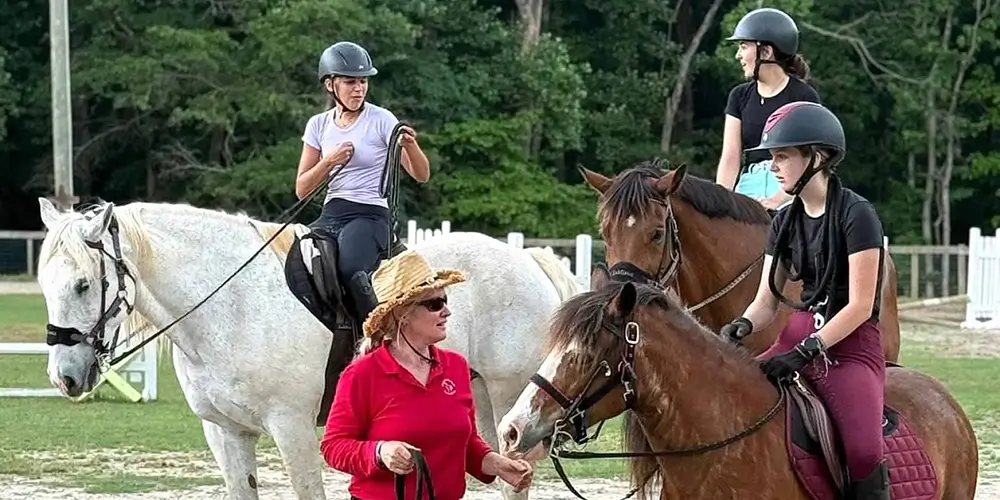
Why Do We Change Direction So Often?
People watching a riding lesson sometimes notice that riders change direction frequently in the arena. They may circle one way, then reverse and go the other way.
This isn’t random – it’s intentional.
Horses, like people, naturally have a stronger side and a weaker side. If riders always travel in one direction, the horse begins to develop muscles unevenly. Over time, that imbalance can affect the horse’s comfort, soundness, and ability to work well.
Changing direction helps keep the horse evenly developed on both sides of the body.
Thoughtful Horsemanship
It also helps riders learn to feel differences between the horse’s sides. A horse may bend easily to one direction but feel stiffer in the other. Part of learning to ride is learning to recognize and work with those differences.
Direction changes also connect to another important concept riders learn: posting diagonals. When riders reverse direction, they must also switch their diagonal so the horse stays balanced in the new turn.
All of this is part of thoughtful horsemanship.
Good riding is not just about guiding the horse around the arena. It’s about developing the horse’s body in a balanced way and learning to work together as partners.
The small details – like switching direction and maintaining correct diagonals – are what help horses stay comfortable and able to do their jobs for many years.
What Is a Diagonal?
When riders first begin learning to post the trot, they usually have no idea that something called a diagonal even exists.
At that stage, they are simply trying to learn the rhythm of the trot and coordinate the up-and-down movement of posting.
But as riders develop, they begin to learn about diagonals – and why they matter.
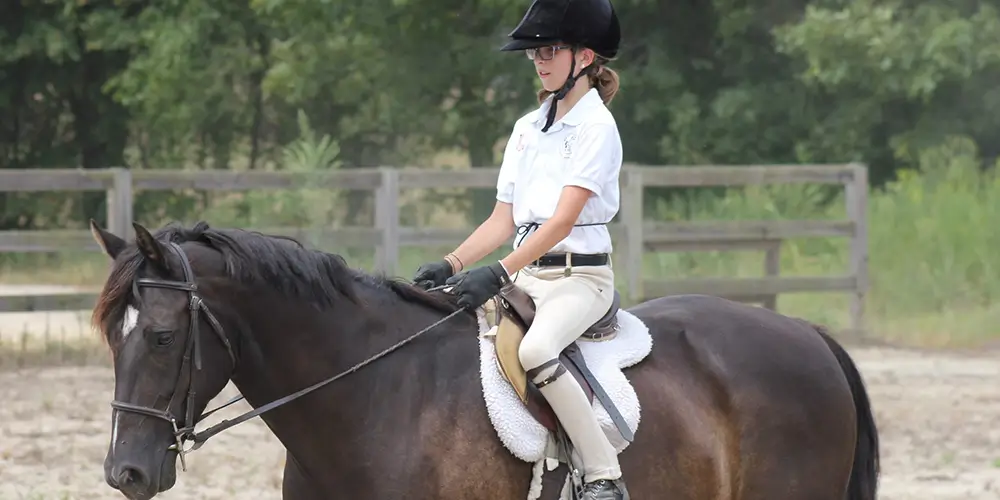
A trot is a two-beat gait where the horse moves in diagonal pairs of legs. One pair moves together (left front and right hind), then the opposite pair (right front and left hind).
When a rider posts the trot, they rise and sit in rhythm with these moving pairs.
In correct posting, the rider rises as the horse’s outside front leg is moving forward. This is called being on the correct diagonal
Why does that matter?
Because the horse is essentially carrying the rider with the shoulder the rider is standing with. That shoulder is doing a bit more work in that moment.
Becoming an Effective Rider
By posting on the outside diagonal, the rider helps the horse balance more easily in the turn. It also prevents one side of the horse from being overworked.
Good riding is always concerned with symmetry and balance. Horses should develop muscles evenly on both sides of their body
That’s why riders also change direction frequently in the arena. Changing direction and maintaining correct diagonals helps keep the horse balanced and evenly muscled over time.
When a rider is on the wrong diagonal, the fix is simple:
- Sit for two beats, or
- Stand for two beats
This shifts the rhythm so the rider lands on the correct diagonal.
Understanding diagonals is one of the early signs that a rider is beginning to truly feel what the horse is doing underneath them.
And that awareness is a key step in becoming a thoughtful and effective rider.
Why I Sometimes Start a Conversation During Lessons
People sometimes notice that during a lesson I’ll suddenly ask a rider about their day… their family… or what sport they played at school.
It might seem like simple conversation, but it’s actually intentional.
Riding is a physical skill that combines timing, balance, strength, and something that’s talked about less often – feel. Riders have to learn to feel what the horse is doing underneath them.
When riders start trying too hard, they often get tense and “in their head.” Their bodies stiffen, they overthink every movement, and that tension travels right down the reins to the horse.
Horses feel everything.
Sometimes the best way to help a rider improve isn’t more instruction – it’s helping them relax.
So I might start asking about their day or something happening in their life. The conversation gently shifts their focus away from trying so hard. Their body softens, their breathing changes, and suddenly they begin moving more naturally with the horse.
Research in sports coaching shows that when athletes focus too much on words and instructions, body awareness often turns off. The body learns movement best when it has space to feel.
Those moments of conversation aren’t distractions.
They’re part of helping riders find the rhythm, balance, and feel that good riding requires.
Sometimes the best teaching happens when the rider forgets they’re trying so hard.
Why I Sometimes Stop Talking During Lessons
People watching a riding lesson sometimes notice something interesting.
There are moments when I stop talking.
That’s intentional.
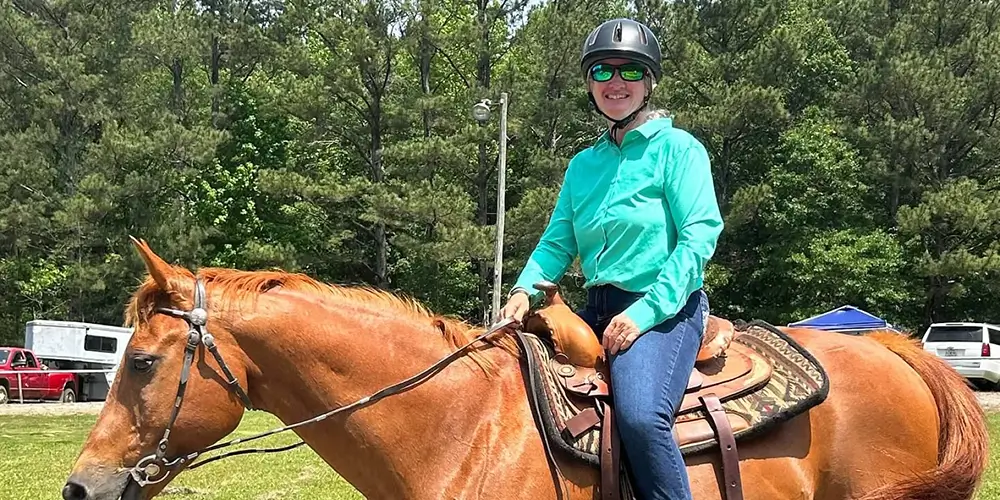
Riding is a physical skill, and the rider’s body has to learn how to move with the horse. Balance, timing, and feel can’t be learned only through words.
In fact, research in sports coaching shows that when a coach is constantly giving instructions, the rider’s ears turn on – and body awareness often turns off. The brain starts focusing on processing words instead of feeling movement.
And riding is all about feeling.
Feeling the rhythm of the trot.
Feeling when the horse shifts balance.
Feeling when the horse is ready to move forward.
If I talk nonstop, riders often try to think their way through riding instead of letting their body learn the movement.
So sometimes I give an instruction… and then I let there be quiet.
Those quiet moments allow riders to connect with the horse and develop the awareness that good riding requires.
Over time, that awareness becomes instinct. And that’s when riding really begins to look effortless.
Because the best riders don’t just follow instructions.
They feel the horse.