
If you’re new to horseback riding (or getting back into it after a long break), one of the first questions that often comes up is:
What’s the difference between riding in a Western saddle versus an English saddle?
The short answer? Both saddles are excellent tools – but they’re designed for different purposes, and they influence how a rider uses their body in very different ways.
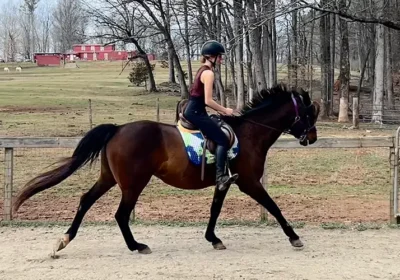
English Saddles: Less Support, More Skill Building
English saddles are lighter and more minimal by design. They have:
- A flatter, shallower seat
- A lower cantle
- A low pommel
- Thin stirrup leathers that allow the rider’s leg to move freely forward and back
 Because there’s less built-in support, the rider can’t rely on the saddle to “hold them in.” Instead, the English saddle encourages riders to:
- Use their core muscles
- Develop balance and body awareness
- Learn correct leg position
- Move with the horse rather than sit on the horse
This makes English riding especially effective for building strong fundamentals quickly. Riders develop balance, coordination, and strength faster because their body has to actively do the work.
The only thing that demands more balance and core engagement than an English saddle is riding bareback – which I do not recommend for beginners. Most new riders simply don’t yet have the balance or strength required, which often leads to unnecessary falls.
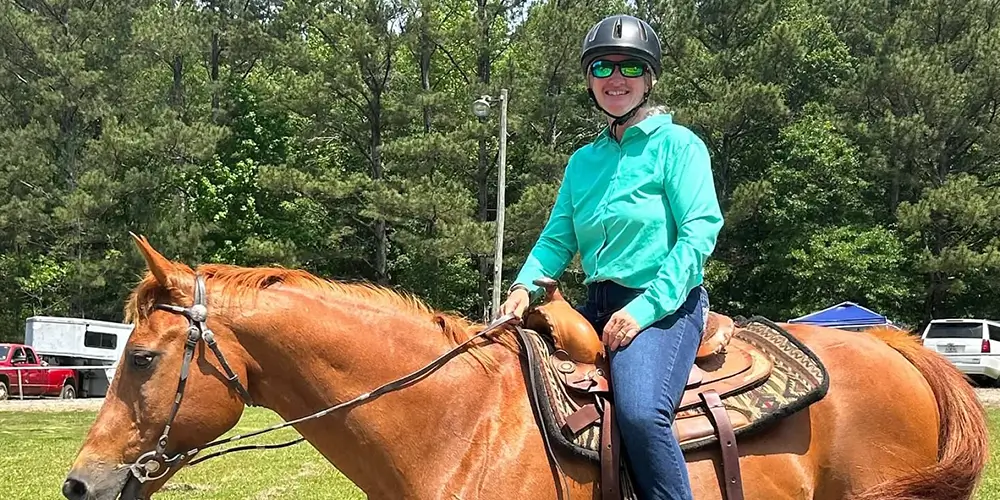
Western Saddles: Built for Comfort, Security, and a Job
Western saddles were developed with a very specific purpose in mind: long hours in the saddle while working cattle and navigating rough terrain.
They feature:
- A deeper seat
- A higher cantle
- More leather surrounding the rider
- A horn, originally designed for roping cattle
All of this provides comfort and security, especially over long rides or uneven ground. Western saddles are excellent for trail riding, ranch work, and riders who value stability and support.
Because of this built-in structure, Western saddles can feel more forgiving, especially for riders who already have experience or those who rode when they were younger and are returning to the saddle as adults.
Why I Teach Primarily English
I teach primarily English riding because most of my students ride once per week. With that limited saddle time, it’s important that riders:
- Build strength efficiently
- Improve balance as quickly as possible
- Learn how to truly use their bodies
The English saddle helps accelerate those skills. Riders learn to stabilize themselves, develop correct posture, and move in harmony with the horse-skills that transfer beautifully into any riding discipline later on.
I do have a few Western riders, most often older adults who rode Western when they were younger and feel most comfortable returning to that style. I also personally show Western Ranch, so I deeply respect and enjoy the Western discipline.
Not “Better,” Just Different Tools
Both English and Western saddles have clear positives and negatives. One isn’t “better” than the other – they’re simply designed for different jobs.
My goal as an instructor is to help riders:
- Develop strong fundamentals
- Learn balance and body control
- Become confident, thoughtful horse people
I’ve found that these skills are most easily and effectively acquired in an English saddle, especially for beginners and riders with limited weekly lesson time.
Strong basics last a lifetime – and once you have them, you can ride anything.
Interested in horseback riding lessons? See our lessons for children and adults.